
What Is a Liquidation Pallet? (And How to Buy One Without Getting Smoked)
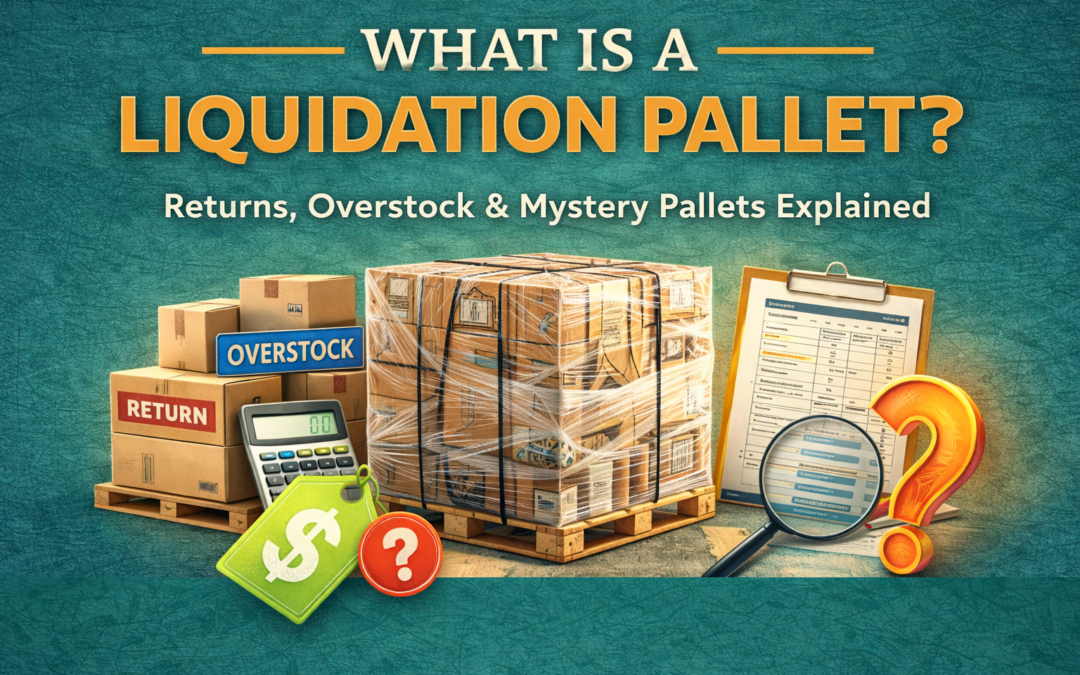
A liquidation pallet is a bulk lot of merchandise—usually a wrapped pallet of mixed items—sold at a discount because a retailer or manufacturer needs it moved fast. The pallet can contain customer returns, overstock, shelf pulls, closeouts, or salvage. Instead of paying people to inspect and resell items one-by-one, the seller bundles them into pallets (or truckloads) and sells them as-is to recover cash and clear space.
If you’ve ever seen terms like “returns pallet,” “Amazon pallet,” “overstock pallet,” “mystery pallet,” or “manifested pallet,” you’re looking at different flavors of the same thing: bulk liquidation inventory.
Why liquidation pallets exist (the simple economics)
Retailers deal with massive volumes of returned and excess inventory. Processing each item costs money: shipping back, inspection, repack, storage, and the risk it gets returned again. When those costs start eating the potential resale value, sellers often choose bulk liquidation as the fastest time-to-cash option.
The National Retail Federation (NRF) and Happy Returns (a UPS company) projected U.S. retail returns would total $890 billion in 2024 (about 16.9% of annual sales).
Official NRF press release:
https://nrf.com/media-center/press-releases/nrf-and-happy-returns-report-2024-retail-returns-total-890-billion
NRF research page summary:
https://nrf.com/research/2024-consumer-returns-retail-industry
That scale is why pallets exist. Not because the universe loves resellers (though it occasionally does).
What’s inside a liquidation pallet?
A pallet’s contents vary by seller and category, but most pallets fall into these types:
1) Overstock pallets
New items that didn’t sell fast enough, seasonal leftovers, or “too much inventory.”
-
Risk level: low to medium
-
Best for: beginners, retail-style resale, local pickup shops
2) Customer returns pallets
Items customers sent back—could be unopened, lightly used, missing parts, or broken.
-
Risk level: medium to high
-
Best for: resellers who can test, clean, list, and handle defects
Good plain-English overview of what “customer returns” means in liquidation:
https://bstock.com/blog/a-guide-to-buying-customer-returns/
3) Shelf pulls / closeouts
Discontinued lines, packaging changes, store resets, end-of-season.
-
Risk level: low to medium
-
Best for: steady resale categories (home goods, tools, seasonal)
Direct Liquidation’s explanation of shelf pulls vs overstock/returns (useful definitions):
https://www.directliquidation.com/blog/post/what-is-liquidation/
4) Salvage / parts pallets
Non-working or damaged goods meant for parts, repair, or scrap.
-
Risk level: high
-
Best for: technicians, repair resellers, parts sellers
Manifested vs. unmanifested pallets (the big fork in the road)
Manifested pallets
Come with a list (“manifest”) of what should be inside—often including item names and retail values.
-
Pros: more predictability, easier to price, less chaos
-
Cons: higher cost, manifests can be wrong/outdated, MSRP can be inflated
Helpful explainer on how manifests work (and why they’re not perfect):
https://bstock.com/blog/buying-basics-all-about-manifests/
Unmanifested / mystery pallets
No list—just photos or basic category info.
-
Pros: cheaper, potential for big wins
-
Cons: higher variance, more duds, you’re buying uncertainty
Real talk: a manifest is a clue, not a promise.
How liquidation pallet pricing works
Pallets are usually priced based on a mix of:
-
estimated retail value (often MSRP, sometimes “current retail”)
-
category desirability (tools/electronics often price higher)
-
condition mix (new vs returns vs salvage)
-
level of auditing (manifested vs not)
-
volume and speed (older inventory gets discounted)
As the buyer, you should price based on recoverable value, not retail fantasy.
If you want a general “buyer mindset” guide to liquidation pallets (process + expectations):
https://bstock.com/blog/guide-to-liquidation-pallet-purchases/
And a practical checklist format that’s useful before you bid:
https://bstock.com/blog/the-complete-checklist-for-buying-liquidation-pallets/
How to evaluate a liquidation pallet before buying
Use this quick checklist.
A) Ask what the pallet is
-
Overstock? returns? salvage? mixed?
-
Tested or untested?
-
Any condition grading?
B) Confirm policies
-
Any return window?
-
“As-is” only?
-
Can you inspect in person?
C) Estimate your real costs
-
transportation (truck/van, fuel)
-
sorting + testing time
-
missing parts replacements
-
disposal/dump fees
-
storage space
D) Decide if it fits your selling channels
-
Facebook Marketplace (big + local)
-
eBay (smaller, shippable, higher effort)
-
flea market / booth / bin store style
-
your own site
If you don’t have a clear channel, the pallet becomes a very expensive storage unit.
Best liquidation pallet categories for beginners
If you’re starting out, these usually have the best effort-to-profit ratio:
-
household goods (non-electrical, easy to ship/pickup)
-
small appliances (if you can test)
-
tools (especially if you know brands + battery platforms)
-
home improvement (faucets, lighting, hardware)
-
seasonal (when you time it right)
Avoid early on:
-
high-return electronics
-
damaged furniture lots
-
mystery pallets with no photos
-
anything requiring specialized repair unless that’s your skill
The #1 mistake people make with liquidation pallets
They buy based on MSRP totals instead of sell-through reality.
A pallet can claim $5,000 MSRP and still be a bad buy if:
-
it’s mostly low-demand items
-
half is incomplete
-
shipping costs kill margins
-
it takes you 30 hours to process
In liquidation, speed beats perfection. Consistent 20–40% margins with fast turnover can beat “jackpot hunting.”
Liquidation pallet FAQ
Are liquidation pallets worth it?
They can be—if you buy the right type, price the risk correctly, and can process inventory quickly. The returns market is huge (NRF’s 2024 returns estimates show why):
https://nrf.com/media-center/press-releases/nrf-and-happy-returns-report-2024-retail-returns-total-890-billion
What’s the difference between a returns pallet and an overstock pallet?
Overstock is usually new surplus. Returns are items that came back from customers and can vary widely in condition.
Returns overview: https://bstock.com/blog/a-guide-to-buying-customer-returns/
What does “as-is” mean?
It means you’re buying it in its current condition with limited or no recourse. Assume you own the problems as soon as you pay.
Sources / Official Links (copy/paste)
Returns economics (NRF)
https://nrf.com/media-center/press-releases/nrf-and-happy-returns-report-2024-retail-returns-total-890-billion
https://nrf.com/research/2024-consumer-returns-retail-industry
Liquidation definitions + buying basics
https://bstock.com/blog/a-guide-to-buying-customer-returns/
https://bstock.com/blog/buying-basics-all-about-manifests/
https://bstock.com/blog/guide-to-liquidation-pallet-purchases/
https://bstock.com/blog/the-complete-checklist-for-buying-liquidation-pallets/
https://www.directliquidation.com/blog/post/what-is-liquidation/