Best Ways to Organize Inventory for Liquidation Resellers (Without Drowning in Your Own “Deal Pile”)
Liquidation inventory is chaotic by nature. One pallet can contain brand-new items, open-box returns, missing parts, and stuff that looks like it survived a minor war. So the goal isn’t “perfect organization.” The goal is a system that keeps inventory moving, reduces re-handling, and makes it easy to find product when it’s time to list, bundle, ship, or run a local sale.
Below are the best ways to organize inventory when your SKUs are messy and your margins depend on speed.
1) Organize by “Speed to Cash” (ABC Thinking, But Practical)
Instead of organizing first by category (electronics/home/etc.), organize first by how quickly the item turns into money. This is basically the spirit of ABC analysis: prioritize the inventory that matters most to profit and cash flow.
Source: https://www.netsuite.com/portal/resource/articles/inventory-management/abc-inventory-analysis.shtml
A simple 3-zone system:
-
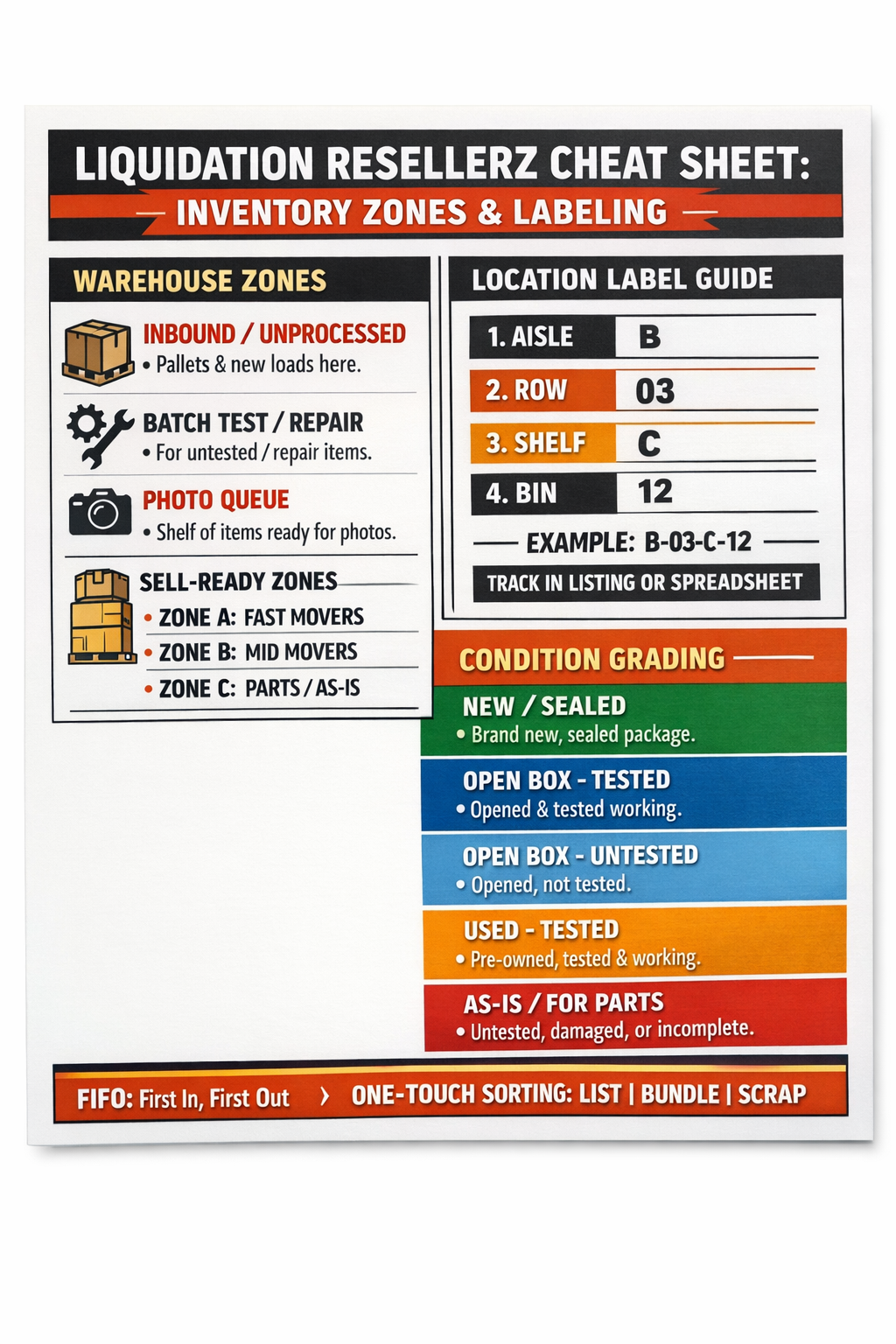
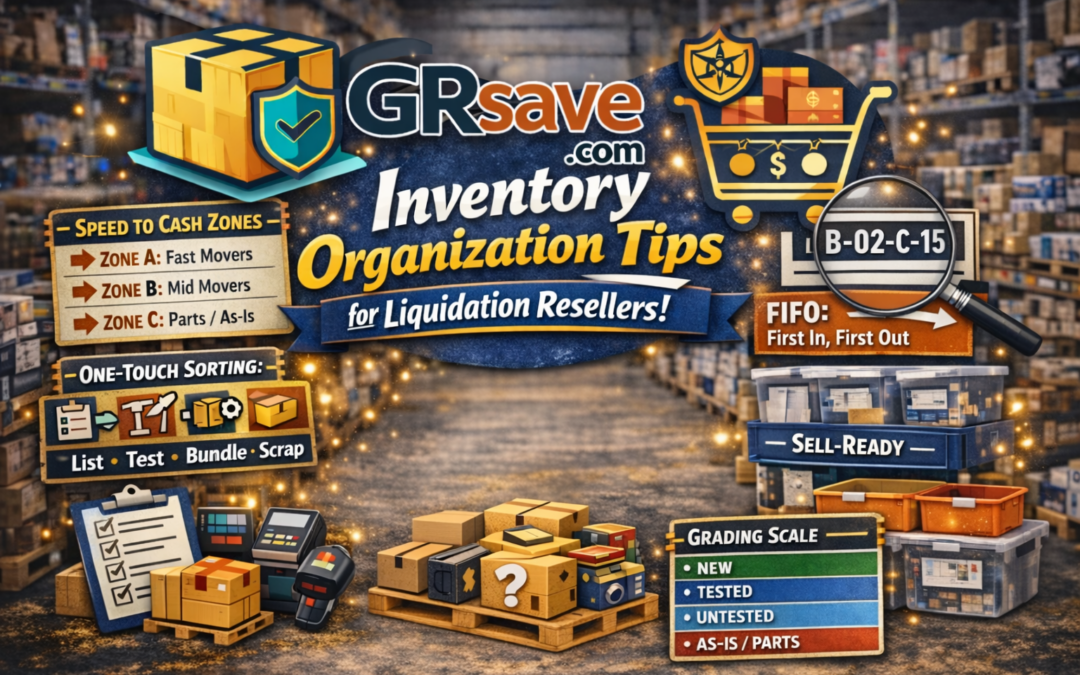
Zone A (Fast Movers): high demand, easy to test, easy to ship — list ASAP
-
Zone B (Mid Movers): decent demand but needs photos, cleaning, bundling, or patience
-
Zone C (Slow/Risk): parts/as-is/unknowns — keep contained so it doesn’t spread
This prevents the classic liquidation tragedy: meticulously organizing low-value stuff while high-value items sit unlisted.
2) Separate “Unprocessed” From “Sell-Ready” Like It’s Contagious
Unprocessed liquidation inventory creates decision fatigue and duplicate work. Make two physically separate areas:
-
Inbound / Unprocessed: pallets/gaylords/new loads waiting for sort & grading
-
Sell-Ready: only items that are tested/graded, labeled, and ready to ship/sell
This lines up with lean/5S warehouse thinking: reduce clutter and create clear “homes” for items so work flows instead of jams.
Sources:
https://www.shipbob.com/blog/warehouse-5s/
https://www.leanproduction.com/5s/
3) Use a One-Touch Sorting Rule to Kill the Pile Monster
The #1 inventory killer is the “I’ll deal with it later” pile. Fix it by forcing each item to get an outcome the first time you touch it:
-
List (individual)
-
Bundle
-
Test/Repair
-
As-Is sale
-
Donate/Recycle/Trash
This isn’t about being harsh — it’s about preventing re-handling, which quietly eats profit.
If you want a structured method for keeping your space clean and repeatable, 5S is worth skimming:
https://www.shipbob.com/blog/warehouse-5s/
4) Create Location Labels That a Tired Human Can Follow
You don’t need enterprise software. You need consistent location IDs you can write in a listing note or spreadsheet:
Example format: Area / Aisle / Bay / Level / Bin
Example label: B-03-C-12 (Aisle B, Bay 03, Shelf C, Bin 12)
Guides on warehouse location labeling (helpful even for small ops):
https://www.cadretech.com/cadre-blog/optimizing-efficiency-with-warehouse-location-labels-a-comprehensive-guide/
https://c2wtechnology.com/how-to-label-your-warehouse-bin-locations/
Once you assign a location, your inventory stops being “somewhere in the building” and starts being “right there.”
5) Standardize Condition Grading (So You Don’t Argue With Yourself Later)
Liquidation resellers bleed money when condition is vague. Use a simple grading system and apply it consistently:
-
New / Sealed
-
Open Box — Tested Working
-
Open Box — Untested
-
Used — Tested Working
-
As-Is / For Parts
Then tie it to storage rules:
-
Tested working → sell-ready shelves
-
Untested → dedicated “batch test” queue
-
As-is → separate as-is/bundle shelf
6) Batch Listing: Build Your Shelving Around Your Workflow
If your workflow is: sort → test → photo → list → store… then your space should reflect that pipeline.
A practical batch flow:
-
Sort + Grade
-
Clean/Wipe
-
Photo Station Queue
-
Listing Batch
-
Label + Assign Location
-
Shelf It
Lean warehousing ideas apply here (reduce wasted motion, reduce “search time”):
https://modula.us/blog/lean-warehousing/
https://www.prologis.com/what-we-do/resources/how-to-operate-a-lean-warehouse
7) Label Like You Mean It (Barcodes Optional, Consistency Not Optional)
Even without scanners, good labeling prevents time-wasting scavenger hunts.
Warehouse labeling best practices (bin/shelf/product labels):
https://www.shipbob.com/warehouse-management/warehouse-labeling/
Bin location labeling tips (including consistent formats and barcode/QR suggestions):
https://c2wtechnology.com/how-to-label-your-warehouse-bin-locations/
If you do want barcoding later, here’s a solid overview:
https://cyzerg.com/blog/warehouse-barcoding-a-comprehensive-guide/
8) Use FIFO Thinking to Prevent “Inventory Rot”
FIFO = First In, First Out. In liquidation, it doesn’t just apply to perishables — it applies to relevance and shelf space. Older inventory tends to become harder to sell, harder to find, and easier to ignore.
FIFO fundamentals (good practical overview):
https://www.rfgen.com/blog/fifo-fundamentals-critical-for-inventory-management-business-success/
A recent FIFO warehousing guide:
https://www.theaccessgroup.com/en-au/erp/software/warehouse-management-system/guide-to-first-in-first-out-fifo/
Simple liquidation version of FIFO: put older sell-ready items closer to the front of the shelf and price-drop/bundle them on a schedule.
9) Bundle Intentionally (Bundles Are Inventory Pressure Valves)
Bundles aren’t just for junk — bundles are how you turn messy liquidation fragments into one clean transaction:
-
accessory bundles (cables, cases, chargers)
-
parts bundles (as-is electronics, missing pieces)
-
themed bundles (kitchen set, dorm starter kit)
-
reseller bundles (mystery boxes / lots)
The trick: store bundle candidates together so bundling takes minutes, not hours.
10) Use Time Limits (Inventory Is Either an Asset or a Squatter)
Set rules so dead inventory can’t live in your building for free:
-
30–60 days: reprice or bundle
-
60–90 days: bulk lot / as-is sale / donation pipeline
The exact windows vary, but the principle is constant: shelf space is expensive.
Quick “Starter System” That Works for Most Liquidation Resellers
-
Inbound pallet zone (unprocessed)
-
Batch test queue
-
Photo queue shelf
-
Sell-ready shelves with location labels
-
As-is / parts zone isolated
-
Fast/mid/slow zones (speed to cash)
-
FIFO-style rotation on sell-ready
This isn’t fancy. It’s survivable. And survivable systems make money.